How is Poetry Therapy used in a Narrative Psychotherapy Group Session?
The use of poetry in therapy has been around for a long time. Also sometimes referred to as bibliotherapy, the use of literature can help to increase self-awareness and process emotions.
You might already have tried journaling or creative writing classes to help process your life experiences. Poetry Therapy goes one step further to guide you in this experience with a trained therapist. Viewed through a Narrative therapy lens, ‘the problem is the problem’ so this type of creative therapy help to externalize issues you may be struggling with.

How does it work? Do I need creative writing experience?
Writing is both a therapeutic activity and a clarifying one. Through discussing your thoughts and feelings and then putting something in writing (rough writing) you can begin to gain more insight into your own perspectives, values and beliefs. This can help you to see where certain idea(l)s come from, and even help to build self-confidence and self-esteem.
Poetry therapy uses poems, lyrics or other text as a jumping off point to therapeutic discussion and reflection through the use of creative expression and metaphor.
You may be familiar with the idea of a Poetry therapy workshop or class where you might be asked to reflect on what the author means to say or convey.
In a poetry therapy session we won’t consider the authors intention about a piece of text or poetry because its a therapy session which is focused on yourself and others in the group. How you feel about a piece of text or poem, or what it brings up for you or others is the thing we will focus on.
No experience with poetry or writing is needed and we won’t be learning to write poetry.
In a Poetry Therapy session you may be offered a writing prompt to start a piece of writing from. This may be a line from a piece of text that stands out to you, or a theme that is coming up in the session.

Why the group format?
Groups can often mimic small communities, so interpersonal issues can often be gradually worked on in a group setting as they arise. Do you find yourself ‘ghosting’ others because social interactions are awkward? Do you feel that you over-commit or are the first one to volunteer (because someone’s got to do it!) Are you usually the quiet one in a group?
Though groups may feel like vulnerable places to share, group facilitators are trained in focusing on group cohesiveness, finding ways to ease or work through tensions and/or to elicit creative solutions from group members to conflicts or imbalances if they arise. Essentially a group becomes a microcosm of the larger social space and a place to workshop impulses.
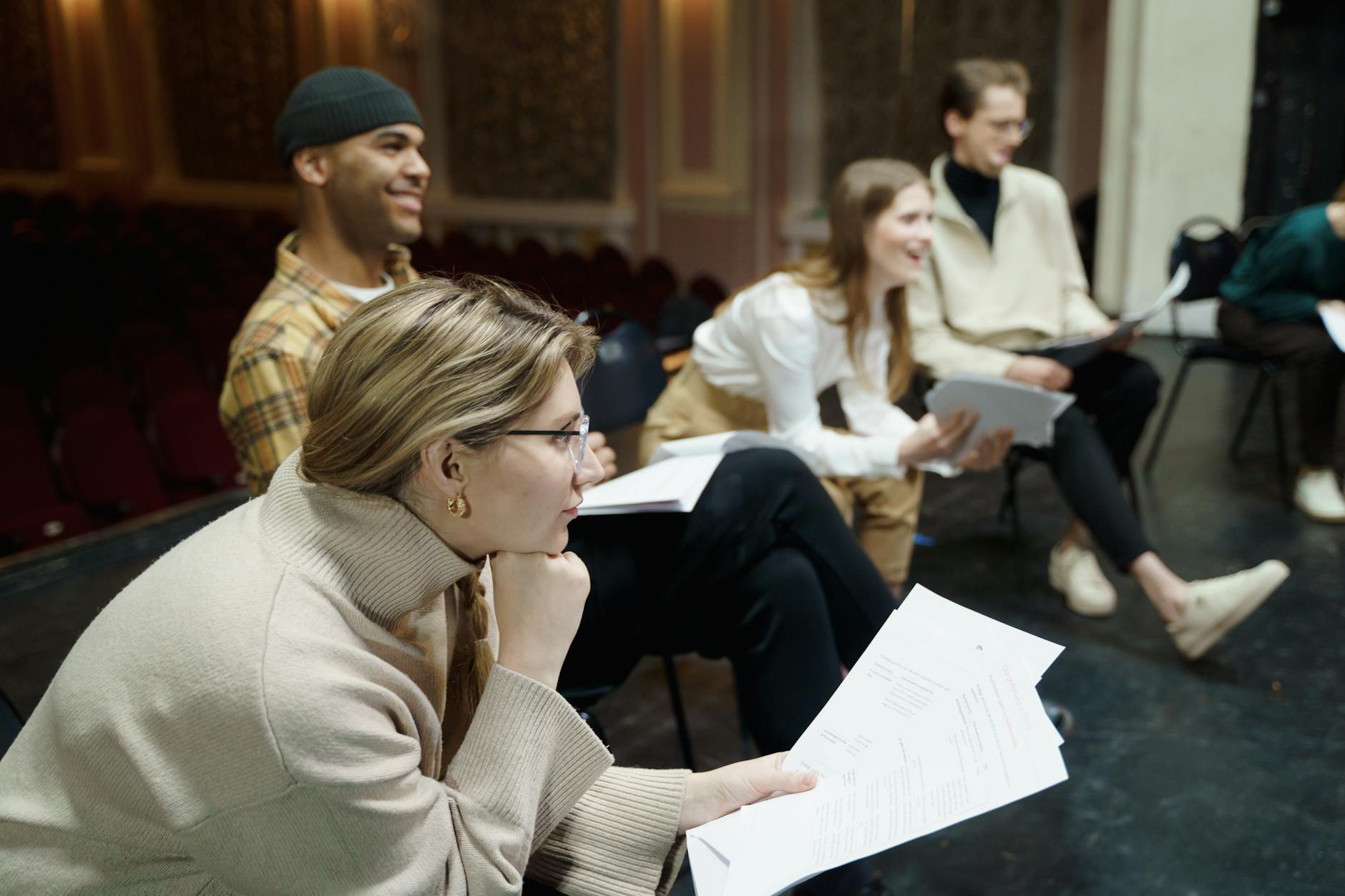
Usually there is a theme, topic or commonality in a group and the text used might evolve around that. Working with a group can be used preventatively (contributing to general well-being) or in response to symptoms (ex. symptoms relating to depression or anxiety, grief and loss in different forms, parenting, caregiving, or learning to attune to joy to name a few).
In a Poetry Therapy session clients might feel that a shared text contains universal knowledge that speaks to an experience that they otherwise don’t have words to. Creating a poem or piece of writing in response to a creative writing prompt also allows clients to reframe narratives. Sharing personal writing is always optional. Having ones insights witnessed by others who have similar stories can be deeply validating. Writing may be a more comfortable means of expression and way to organize thoughts prior to or in place of verbal processing. This can contribute to your nervous system feeling stabilized and safer in a group setting.
Should I Join a Poetry Therapy Group?
If any of these statements below are true for you, you may want to join a Poetry Therapy Group!
- I yearn to be more creative but fear paint and other messy materials.
- I sometimes need a bit of structural support to really get to the heart of things.
- I prefer to relate my own experience through the lens of anothers to get perspective.
- I feel validated through hearing or reading poetry, song lyrics, quotes, and other types of writing.
- I just love poetry!
- I’ve always feared writing but I’m just curious about this.
- I want to explore my feelings in a group through creative exploration but may not want to share the ‘art’ with others because it feels too vulnerable.
- Sometimes I’m cryptic in what I say, and that’s ok.
- I want to focus on how to communicate better/ more effectively/ concisely etc about what’s on my mind.
- Sometimes I’d like the chance to gather my thoughts before responding to a question or prompt.
Poetry Therapy Groups open for registration & pre-registration:
Poetry Therapy for Mental Health Practitioners
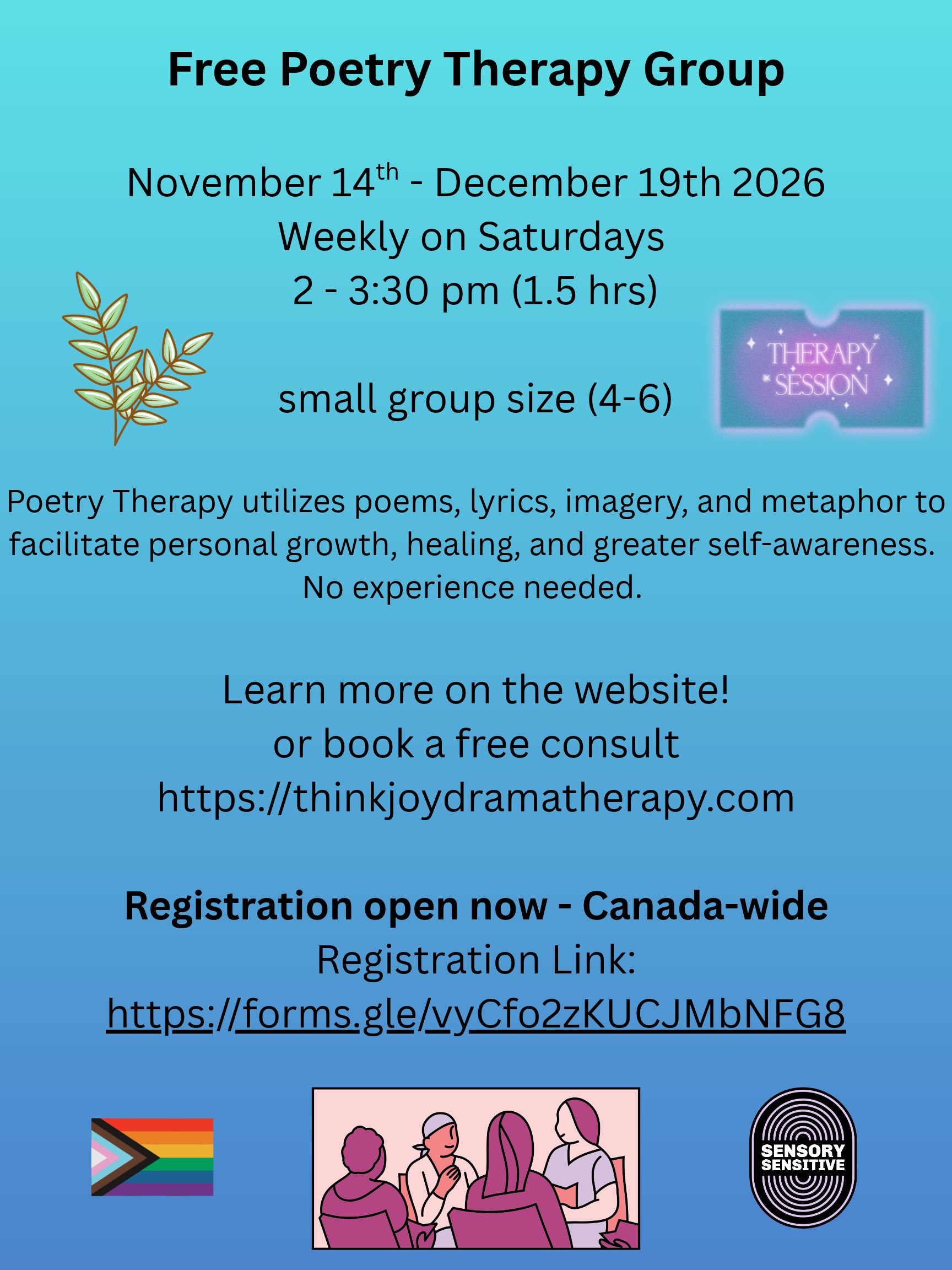
Poetry Therapy for Practitioners: This is a Mental Health Workers Peer Poetry Therapy Group- If you are a student or professional Drama Therapist, Poetry Therapist, EXAT, Art Therapist, Music Therapist, or Psychotherapist (or equivalent) and are interested in joining this group, please send an email and/or fill in the google form below to register for this upcoming group. International practitioners welcomed!
This group is being offered ONLINE monthly on the THIRD Tuesday of the month from 7 – 8:30 pm EST/EDT across Canada / Abroad.
Starts September 15th .
This group is being offered by Deliberate Arts In Health Care (DAHC) through Think Joy Drama Therapy.
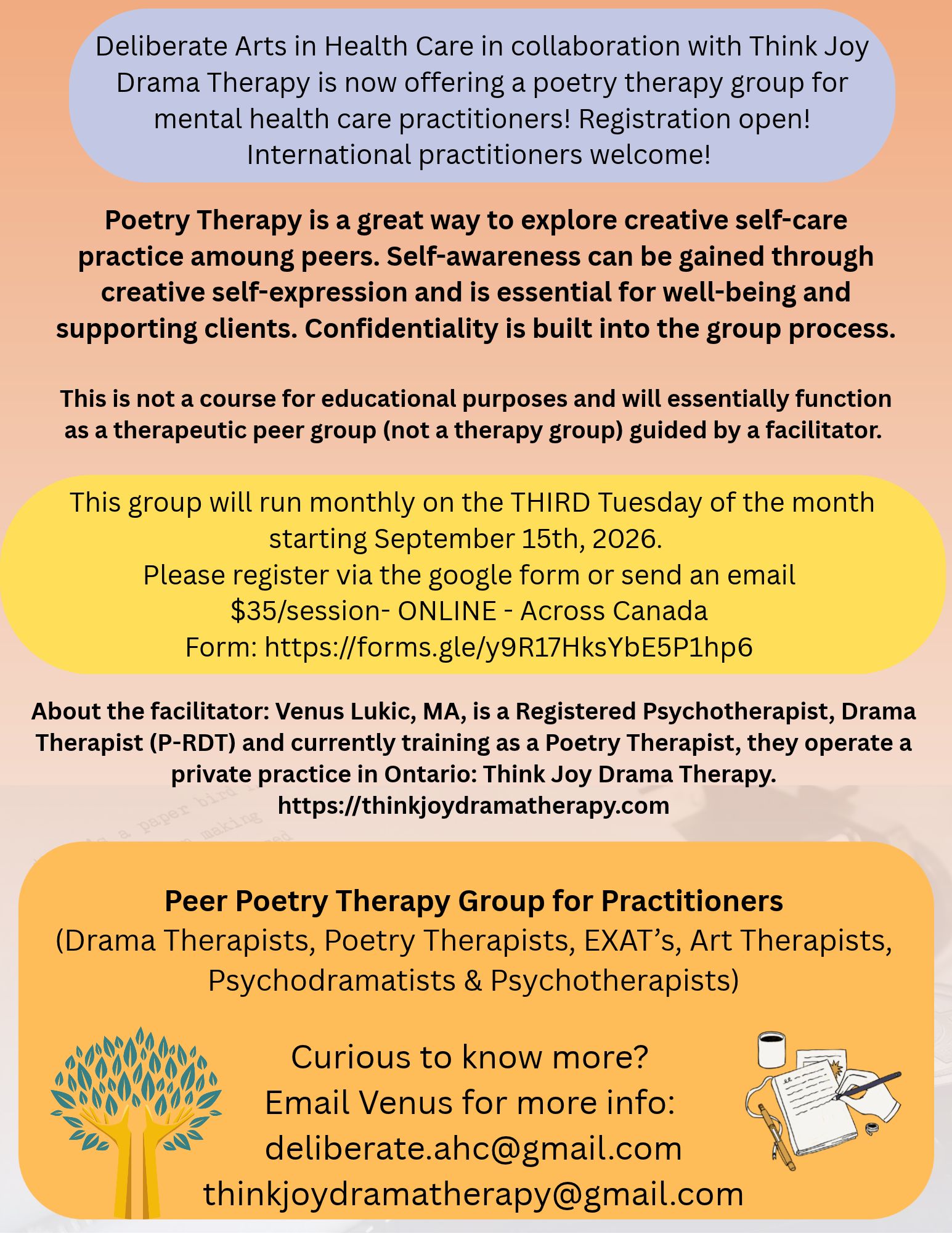
New! Poetry Therapy Group offered November – December 2026 free of charge!
I have decided to offer another free of charge poetry therapy group for under/un-employed individuals. This one will take place on Saturdays from 2 – 3:30 pm and will be weekly. Registration is now open.
NEW Poetry Therapy Group in 2027
This group is being offered as a six- session series bi-weekly, from February – April 2027. Dates/times to be determined.
Please fill in this google preregistration form below or send an email to register your interest.
I need more information!

If you would like to know more about poetry therapy groups you can request a free consultation.
Learn more about Poetry Therapy here or check out this blog posting about the use of Drama and Poetry Therapy in processing trauma narratives and building agentic self-awareness.

